
Hot spots on brake discs: causes and prevention
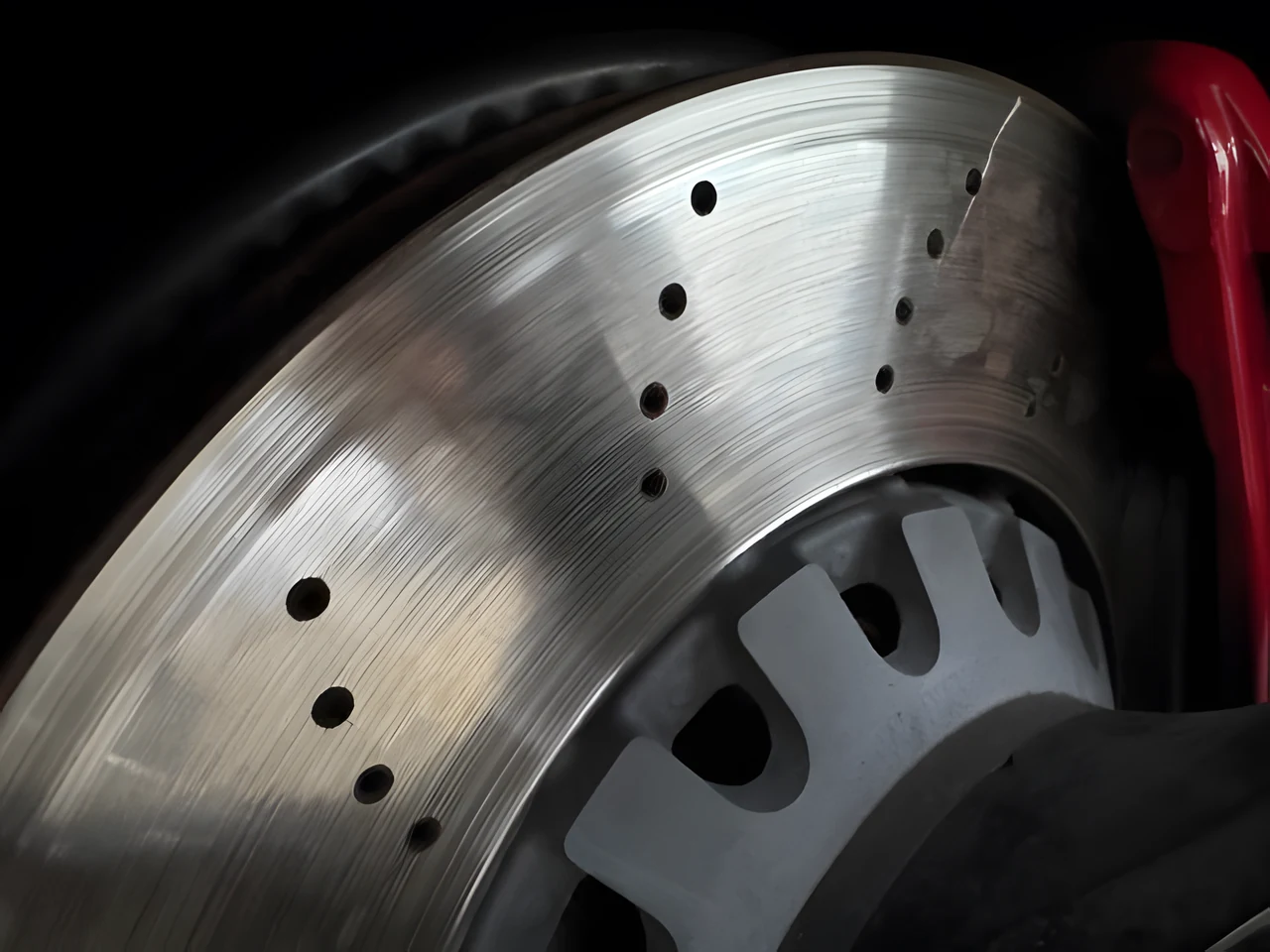
Hot spots on brake discs are locally overheated areas where the structure of the disc changes. They show as blue-violet patches and lead to pulsation and judder when braking. How hot spots form and how you avoid them with proper bedding-in and cooling is explained in this article.
How hot spots form on brake discs
Hot spots form when individual areas of the brake disc become significantly hotter than the rest. The material transforms locally and becomes harder. These hard islands stand out minimally and cause uneven contact when braking - the brake pulsates and judders.
Typical triggers are stopping with a hot brake (pad material burns in at single points), braking too aggressively with pads that aren't bedded in, and sustained thermal overload at track day.
Avoiding hot spots
The most effective protection is clean bedding-in and consistent cooling: after hard braking applications never stop immediately, but let the car roll out. That way the heat distributes evenly and no pad material burns in at single points.
On the track, well-ventilated or two-piece brake discs and a heat-resistant compound help to limit peak temperatures. A correct brake balance prevents one axle from being overloaded.
What to do if the disc already has hot spots?
Light judder sometimes disappears once the pads level the disc out again. If the hot spots are strongly pronounced and the disc is warped, only replacement helps - combined with correct bedding-in of the new components.
Frequently asked questions
- Pulsation: real hot spots or just pad deposit?
- Both feel the same but need different solutions. An uneven pad deposit can often be leveled out again by a fresh, clean bedding-in. Real hot spots with a transformed disc structure, or a warped disc, remain - here only resurfacing (if the thickness allows it) or replacement helps. If the pulsation disappears after a bedding lap, it was usually just deposit.
- Are brake discs with hot spots still safe?
- Light, purely cosmetic discoloration is uncritical. Noticeable pulsation means uneven contact and therefore fluctuating brake force - you should clarify that promptly. With strong hot spots, cracking or a disc below minimum thickness, it belongs replaced, together with correctly bedded-in new pads.
Related topics
Next step
Choose a vehicle, then see matching brakes
Enter the HSN/TSN from your registration document (fields 2.1 and 2.2) or search by make and model.
All articles in the knowledge base